

A family legacy of service and sacrifice reframes one soldier’s life—and loss—as a timeless reflection on duty, freedom, and the human cost of war.
My first thoughts on America, freedom and our military presence were shaped by a family who felt the loss of someone they loved dearly long before they believed it was his time to go. My uncle, Parker, died before I was born. His name, past, present and future, has run through my family line since the 1600s. He was preceded by my great-uncle Parker, whose claim to fame was being a pioneer of aviation, tasked by the King of Denmark to find a shorter route to Europe over the Arctic Circle, and, along with my grandfather, helping to found the Federal Aviation Administration.
Parker’s memory, and all of those who preceded him, were kept alive by his sisters, my mother and aunts, as well as by leaders of foreign countries. According to those who knew him best, his sisters recount their brother as a devilishly handsome man with a wicked sense of humor who could charm the pants off a frog. He teased their suitors with an affectionate joie de vivre that they now understand meant he truly cared for those with whom they placed their lifelong dreams.
Although he had been accepted to graduate school at Stanford, he knew it was his duty to represent his country, having been an ROTC student at the University of Rhode Island. He went to Vietnam to train local citizens, even accompanying them on their combat missions. He was known as someone unselfish who quickly gained the respect of those he tried to help. According to reports, his leadership brought “marked improvement in combat effectiveness.” For all of his strength on the battlefield, his impact was far greater in the villages where he was stationed.
He dedicated his time to improving the quality of life of those who came into his purview. He spent time caring for others in a leper colony at a nearby hospital and attended church services during the day. Local priests remembered him and shared that upon leaving the military, he hoped to dedicate his life to teaching and to instill a spirit of service in others.
He died in Vietnam on May 6, 1963. He set out to help retrieve villagers who had been stranded when his jeep was blocked by Viet Cong forces. He was pulled from the vehicle and taken into the nearby woods, where he was killed. He is listed as the 51st American on the Vietnam Memorial. Although this war officially began in 1955, major United States involvement did not occur until two years after my uncle’s death. It ended in 1975, almost a year after I was born. Over the years, the subject of war was a heavy and sometimes heated discussion at our family gatherings. Some felt we had no right to be involved in foreign wars, while others believed that if we had the power as a country to help others fight for freedom from oppressive regimes, why would we not?
I learned to respect both sides of the argument. On one hand, I loved my country and respected our military; on the other, I felt the sadness that comes from conflict in the pain my family continues to carry from his passing too soon. Yet when I go back and read who my uncle was before he left this world, I am left with a lasting impression of someone who fully understood the measure of his assignment. He was not in Vietnam to fight. He was there to teach and to serve.
“Yet when I go back and read who my uncle was before he left this world, I am left with a lasting impression of someone who fully understood the measure of his assignment. He was not in Vietnam to fight. He was there to teach and to serve.”
– Sarah Lajealle
My first thoughts on America, freedom and our military presence were shaped by a family who felt the loss of someone they loved dearly long before they believed it was his time to go. My uncle, Parker, died before I was born. His name, past, present and future, has run through my family line since the 1600s. He was preceded by my great-uncle Parker, whose claim to fame was being a pioneer of aviation, tasked by the King of Denmark to find a shorter route to Europe over the Arctic Circle, and, along with my grandfather, helping to found the Federal Aviation Administration.
Parker’s memory, and all of those who preceded him, were kept alive by his sisters, my mother and aunts, as well as by leaders of foreign countries. According to those who knew him best, his sisters recount their brother as a devilishly handsome man with a wicked sense of humor who could charm the pants off a frog. He teased their suitors with an affectionate joie de vivre that they now understand meant he truly cared for those with whom they placed their lifelong dreams.
Although he had been accepted to graduate school at Stanford, he knew it was his duty to represent his country, having been an ROTC student at the University of Rhode Island. He went to Vietnam to train local citizens, even accompanying them on their combat missions. He was known as someone unselfish who quickly gained the respect of those he tried to help. According to reports, his leadership brought “marked improvement in combat effectiveness.” For all of his strength on the battlefield, his impact was far greater in the villages where he was stationed.
He dedicated his time to improving the quality of life of those who came into his purview. He spent time caring for others in a leper colony at a nearby hospital and attended church services during the day. Local priests remembered him and shared that upon leaving the military, he hoped to dedicate his life to teaching and to instill a spirit of service in others.
He died in Vietnam on May 6, 1963. He set out to help retrieve villagers who had been stranded when his jeep was blocked by Viet Cong forces. He was pulled from the vehicle and taken into the nearby woods, where he was killed. He is listed as the 51st American on the Vietnam Memorial. Although this war officially began in 1955, major United States involvement did not occur until two years after my uncle’s death. It ended in 1975, almost a year after I was born. Over the years, the subject of war was a heavy and sometimes heated discussion at our family gatherings. Some felt we had no right to be involved in foreign wars, while others believed that if we had the power as a country to help others fight for freedom from oppressive regimes, why would we not?
I learned to respect both sides of the argument. On one hand, I loved my country and respected our military; on the other, I felt the sadness that comes from conflict in the pain my family continues to carry from his passing too soon. Yet when I go back and read who my uncle was before he left this world, I am left with a lasting impression of someone who fully understood the measure of his assignment. He was not in Vietnam to fight. He was there to teach and to serve.
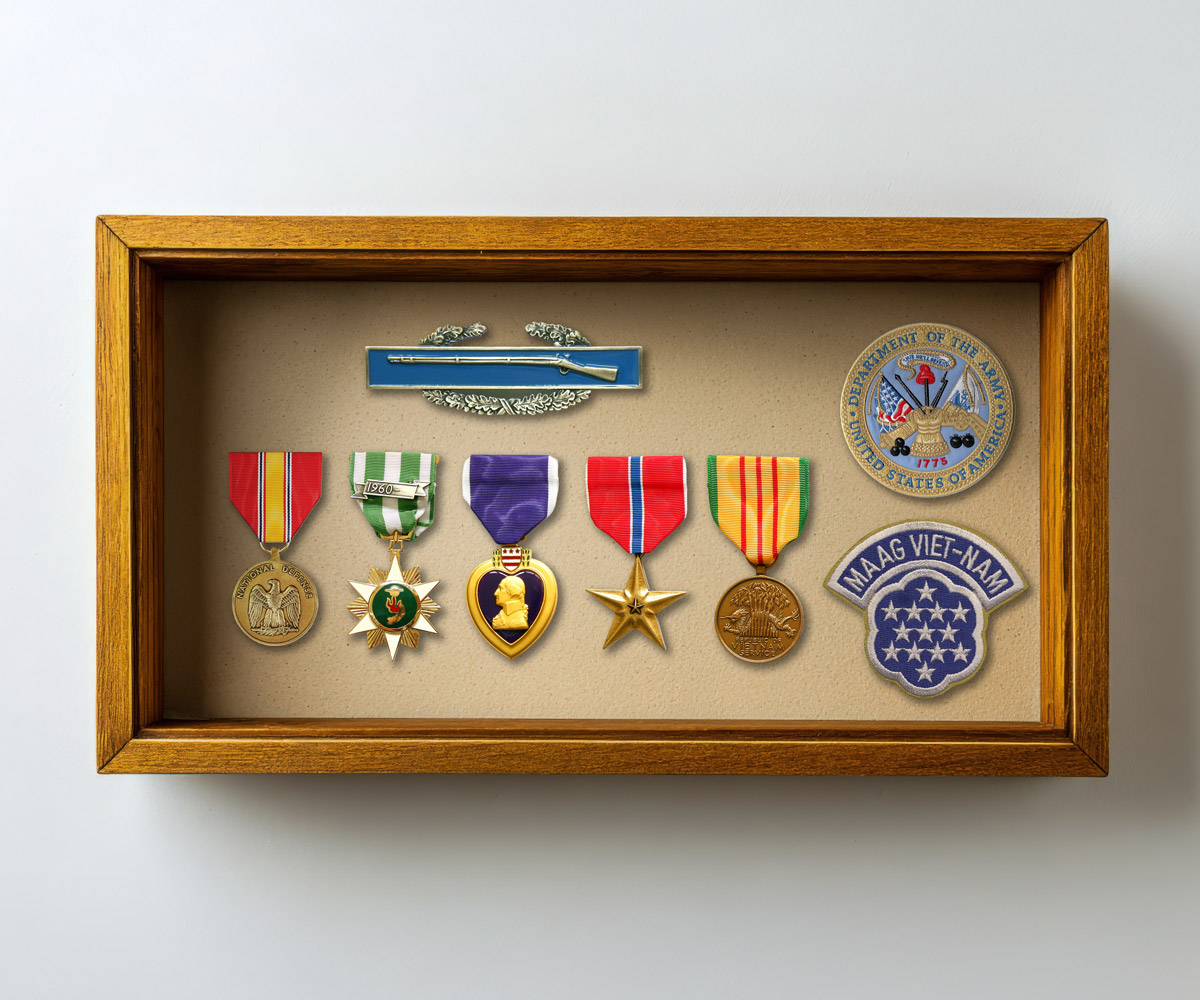
Upon his death, he was awarded the Combat Infantry Badge, Bronze Star, Purple Heart, Vietnam Service Medal and Vietnam Campaign Ribbon. He was recognized as a leader not only by the United States, but also by leaders of a foreign country. The University of Rhode Island has an ROTC battalion named after him to this day and annually asks our family to award a saber to one of their cadets who demonstrates his leadership.
It has been 250 years since the signing of the Declaration of Independence and 63 years since my uncle passed. By signing, our founders were formally stating that our freedoms were not something that could be ruled by a government that believed in rule by divine appointment of one man. More so, they believed all men had certain unalienable rights, life, liberty and the pursuit of happiness, that no one ruler could take away on a whim. In signing this document, our founding fathers knew they were marking themselves for what must have felt like certain destruction by the King of England. By his actions, my uncle also understood the risk of service to others above self.
War, although not a new concept, was something these men knew would follow their quest for freedom from tyranny and something humanity has wrestled with since the beginning of time. According to the three major Abrahamic religions, there is a common framework for moral order that emphasizes the protection of the widow, the orphan and the poor. They share the value of justice and compassion, although differing in how these goals are ultimately achieved.
I have come to learn with age that there is far more that unites humanity than that which divides us. We all agree that love is good and war is bad. We long for a future where there will be no more need to battle one another. This concept is not solely owned by those who live within America, as more than 100 countries have adopted various tenets of our Declaration of Independence. Our founding fathers knew something 250 years ago that still rings true today worldwide.