
What begins as a weekend of music becomes something deeper, where conservation and community come together.
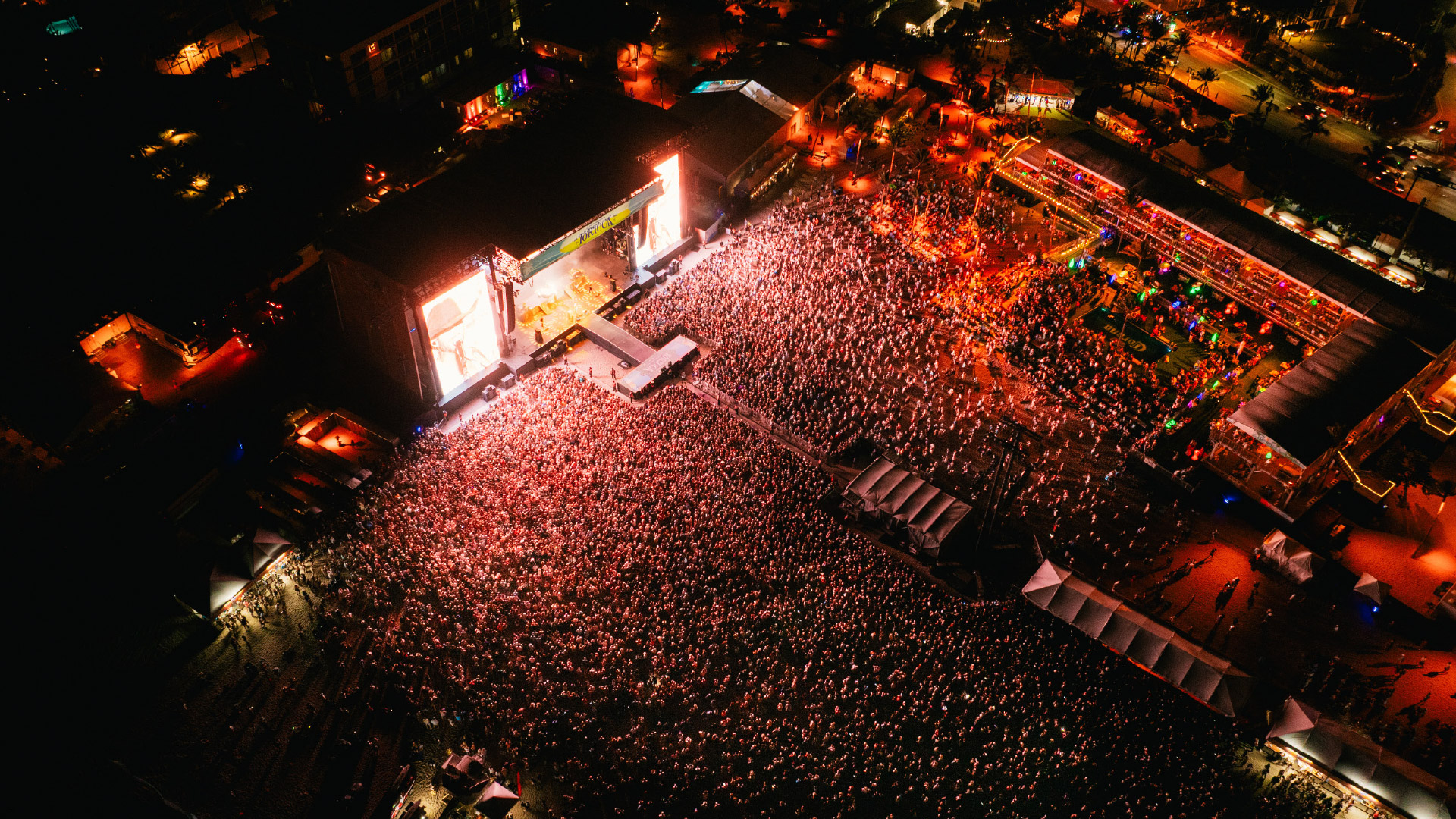
It’s a beautiful spring day in May. The melody of fiddles, guitars, the steady beat of drums and voices that hit just right travel through the air. The sun shines down on you as palm trees sway in the breeze, the wind soft against your skin. Your toes are in the sand, and world-class music fills the shoreline.
This is Rock The Ocean’s Tortuga Music Festival—at first glance.
But there’s something else happening here—something you don’t immediately see.
Because Tortuga isn’t just a music festival. It’s a platform. One built with intention.
What most people don’t realize when they first step onto the sand is that behind the music, behind the energy, behind the crowds, there’s a mission quietly woven into every part of the experience.
For founder Chris Stacey, that mission started with what he describes as a “lightning bolt” moment after watching the documentary The Cove.
As someone who spent his life on the water—fishing, diving, boating—he was stunned by what he didn’t know.
“I had no idea these things were happening in our oceans,” he told me. “Humans killing 100 million sharks every year… dolphin slaughters in Japan… at the time I didn’t even realize how much plastic was in the ocean.”
It wasn’t just eye-opening—it was unsettling.
That moment stayed with him.
“And it just made me instantly think—what can I do to help?”
The answer, for him, came through something he understood deeply—music.
“I’ve been in the music business for 30 years,” he said. “And I’m keenly aware of how powerful the impact of artists can be on their fans.”
That realization became the foundation for Tortuga.
“We’re going to enlist these artists,” he explained, “and hopefully use their microphones to spread the word.”
Stacey was honest about it: “I don’t know if 35,000 people a day are going to show up for the scientists. They show up for the artists.”
But by the time they leave, something shifts.
“I always say we’re a little like a commercial during your favorite TV show,” Stacey said. “You don’t tune in for the commercials—but by the end, you know every word to the jingle.”
That’s where his philosophy comes in—what he calls the “just one thing” mindset.
“If 100,000 people walk away learning just one thing,” he added, “we’ve made a big impact.”
One of the most meaningful parts of the weekend wasn’t even on stage.
During a private tour of Rock The Ocean, the festival’s nonprofit, it all came into focus in a way I didn’t expect.
I met with Rock The Ocean, Vice President Tara Wilson, whose passion for the mission was unmistakable. At one point, she shared a simple phrase that stayed with me:
“To be good is to do good.”
And that’s exactly what this entire operation is built around.
What many people don’t realize is that the proceeds from Rock The Ocean—whether it’s merchandise, beverages or experiences throughout the festival—go directly back into the cause. The organizations you see set up throughout the festival aren’t paying to be there. They’re supported.
More than 30 conservation partners—from universities to environmental organizations—are given the space, the setup and the platform. Booths, tents, materials… everything they need to connect with thousands of people over the course of the weekend.
What really brings it all to life is the Conservation Village.
This isn’t just a few booths off to the side. It’s an entire space dedicated to connecting people directly with the organizations doing the work—real, hands-on conservation happening in real time.
Organizations like the Guy Harvey Foundation, OCEARCH, Sharks4Kids and the Coral Restoration Foundation are there, alongside research teams from Nova Southeastern University and the University of Miami. Sea turtle conservation programs, shark research groups and wildlife rehabilitation teams—it’s all represented.
And what’s remarkable is that they’re not there to sell something—they’re there to engage. To educate. To connect.
These are scientists, researchers and conservationists who, as Chris Stacey described it, are “the real rock stars.”
For many of them, this is their largest opportunity all year to be in front of this many people at once.
What makes it even more impactful is that this isn’t just awareness—it’s action.
“If 100,000 people walk away learning just one thing, we’ve made a big impact.”
– Chris Stacey
Since its launch more than 13 years ago, Tortuga Music Festival and its fans have helped raise more than $6 million to support ocean conservation efforts, funding research, education and on-the-ground initiatives through Rock The Ocean.
Tortuga has been named Festival of the Year by the Academy of Country Music (ACM) in 2016, 2019 and 2023—a reflection not just of the music, but of the experience and purpose behind it.
Looking out over the ocean, watching the clouds drift by, something always stirs in me when I experience live music. There’s a feeling of being fully present—alive in a way that’s hard to describe. Grateful for the arts. Grateful for life. Music has a way of getting into your soul and staying there.
And that feeling is everywhere at Tortuga.
There are smiles on everyone’s faces. A sense of happiness that feels genuine and shared. It’s a reminder of how powerful music can be—how it brings people together in a way nothing else quite can.
At one point, Stacey shared with the crowd how much he loves the discovery of new music—those unexpected moments that stay with you.
And sometimes, it’s not just the music. The day before, an 800-pound sea turtle made her way onto the beach and laid her eggs—something he described as truly magical.
It’s a reminder that at Tortuga, nature and music aren’t separate experiences—they exist together.
You know how sometimes environmental changes can feel like an inconvenience? Something as simple as ordering a drink and ending up with a paper straw that doesn’t quite hold up.
At Tortuga, it’s different.
The sustainability efforts are so seamlessly integrated that you don’t feel inconvenienced—you barely notice them at all. It just works. And in that, you realize that change doesn’t have to feel disruptive to be effective.
Everything is built around a few simple ideas: reduce, rethink, restore.
But what that actually looks like is anything but simple.
We’re talking about tens of thousands of pounds of waste being hand-sorted so it ends up where it should—recycling, compost or landfill. Efforts to protect the shoreline itself, including specialized matting designed to preserve the sand and surrounding environment. And restoration work that goes beyond the weekend, with thousands of seagrass plantings helping rebuild marine habitats over time.
The focus isn’t just broad—it’s intentional. From sea turtles and marine mammals to coral reefs, sharks and ocean habitats, the work spans multiple areas that are all deeply connected.
What stood out to me most is that none of this feels overwhelming when you’re there.
It’s not forced.
It’s just… part of the experience.
Of course, the music itself is unforgettable.
This year’s headliners included Post Malone, Riley Green and Kenny Chesney, bringing a mix of styles and audiences together across the weekend.
The lineup stretched far beyond the headliners, with artist across genres filling the stages from afternoon into night.
Kenny Chesney closed out the weekend and created one of those moments concertgoers always hope for—bringing out a surprise guest, Megan Moroney. You could feel the shift instantly. It was pure excitement, the kind of moment people leave talking about.
One of the things that makes Tortuga feel different is the opportunity to discover something new.
Yes, the headliners bring people in—but it’s often the artists you didn’t expect that stay with you.
For me, that was Lucas Nelson. There was something about his performance that felt raw and real—one of those moments where you stop, listen and realize you’ve found something you didn’t even know you were looking for.
Post Malone stood out to me—not just for his performance, but for who he is. There’s an authenticity about him. He feels genuine, humble, appreciative. The kind of artist who doesn’t just perform, but connects.
Russell Dickerson brought pure energy—fun, upbeat, impossible not to move to. The kind of performance where you feel the beat of the drums in your chest, the rhythm pulsing through you.
It’s the feeling of a full life—loud, joyful and completely in the moment.
If I could offer one piece of advice, it would simply be this: bring more music into your life.
There’s nothing quite like it.
And maybe, somewhere in that experience, something shifts—just one small thing. And that’s where it all begins.
Rock the Ocean
If you want to learn more—or find a way to be part of it—Rock The Ocean continues this work year-round, supporting ocean conservation through research, education and community partnerships. You can learn more at rocktheocean.com.
And each spring, Tortuga returns to Fort Lauderdale Beach—bringing the music, the mission and the moment back to life.