

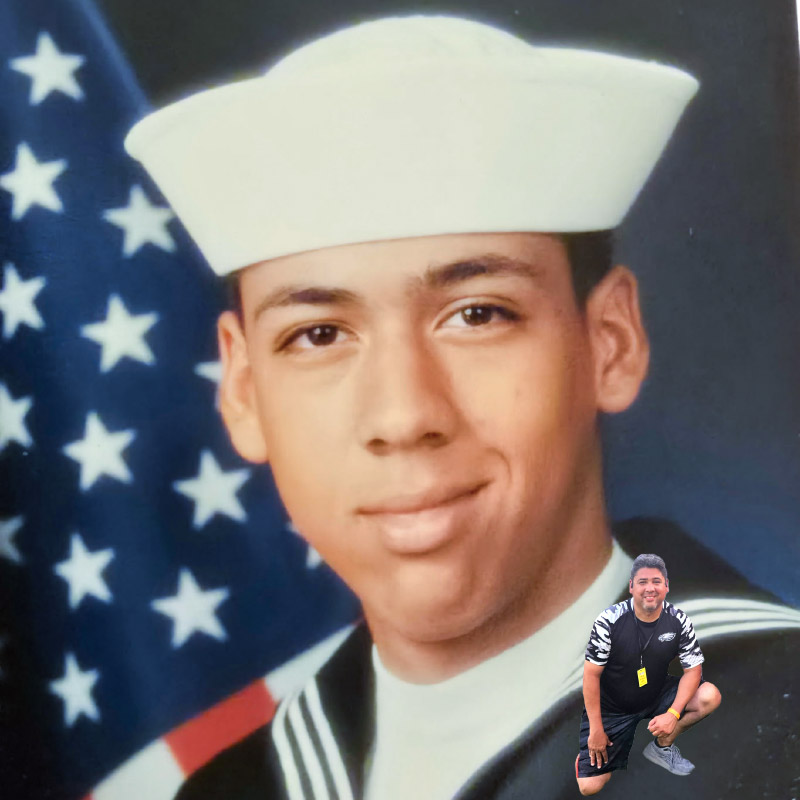
Julian Sinisterra | U.S. Navy, 1992-1998
Julian Sinisterra served in the U.S. Navy from 1992 to 1998, driven by a deep sense of gratitude as a first-generation immigrant. He saw his service as a way to give back to a country that had given his family so much, while also creating an opportunity to travel, learn and expand his perspective. His time in the military shaped him through discipline, focus, flexibility, resilience and strength— values that became part of who he is. Those experiences, along with the relationships he built, helped guide his transition into corporate America and eventually entrepreneurship. As he matured, his mindset shifted from doing to giving, recognizing that many veterans struggle to find direction after service. That realization led him to found VetNet of Ocala, an organization dedicated to helping fellow veterans rediscover their path through entrepreneurship and business ownership. His guiding principle is simple: give with no expectation of return—as you have received, you have a duty to give back.

Lena J. Krumm | Coast Guard, 1991–1995
Julian Sinisterra served in the U.S. Navy from 1992 to 1998, driven by a deep sense of gratitude as a first-generation immigrant. He saw his service as a way to give back to a country that had given his family so much, while also creating an opportunity to travel, learn and expand his perspective. His time in the military shaped him through discipline, focus, flexibility, resilience and strength— values that became part of who he is. Those experiences, along with the relationships he built, helped guide his transition into corporate America and eventually entrepreneurship. As he matured, his mindset shifted from doing to giving, recognizing that many veterans struggle to find direction after service. That realization led him to found VetNet of Ocala, an organization dedicated to helping fellow veterans rediscover their path through entrepreneurship and business ownership. His guiding principle is simple: give with no expectation of return—as you have received, you have a duty to give back.

Josh Dinese | US Army, Eight Years of Service
Josh Dinesen served as a military police officer in the Army for eight years, including a deployment to Iraq from 2008 to 2009. Following his military service, he spent five years as a police officer.
Dinesen says he was inspired by a deep desire to serve his country. He recalls being a ninth grader during 9/11 and feeling a strong urge to protect others, even wishing he had been on one of the planes to stop the hijackers. Years later, after a high-profile school shooting, he experienced that same feeling again, a realization that ultimately led him to pursue both military service and a career in law enforcement.
The military, he says, instilled discipline, consistency and the ability to operate under pressure, along with a mindset of ownership, no excuses, only solutions. That mentality carried into building his business and navigating some of the toughest seasons of his life.
When it comes to supporting returning veterans, Dinesen believes more needs to be done to help with the transition from structure to civilian life. In the military, he says, everything is clear, while in civilian life it often is not. Veterans need guidance in rediscovering purpose, whether through business, career paths or mentorship. “Give them a mission again, not just benefits,” he says, noting that one of his biggest challenges after leaving the military and law enforcement was finding purpose beyond serving others.
He also believes more can be done for homeless and struggling veterans by combining accountability with support. Rather than relying solely on handouts, he advocates for structured programs that rebuild confidence, provide job skills and reconnect veterans with a sense of purpose. Mentorship and community, he says, are critical pieces often missing after service.
Throughout his life, Dinesen has been guided by principles such as praying like it is up to God but working like it is up to you, choosing discipline over motivation, taking ownership, staying consistent and doing what you say you’re going to do.
Today, Dinesen now owns and operates a print shop specializing in promotional products, apparel, signs, banners and mailing services, helping companies manage their branding in one place. He is continuing to scale the business while also launching a wholesale division that supports other print shops. In addition, he is developing a clothing brand for the veteran community and working on software for the print industry.
Dinesen believes one of the most important changes needed in the country is a shift away from division. “At the end of the day, we’re all Americans,” he says, emphasizing the importance of maintaining respect even in disagreement.
For the next generation considering military service, his advice is simple: go all in. He encourages young people to use the experience to build leadership, discipline and habits that will last. “The military is a foundation, not the finish line,” he says, describing his own service as “the worst best years of my life.”
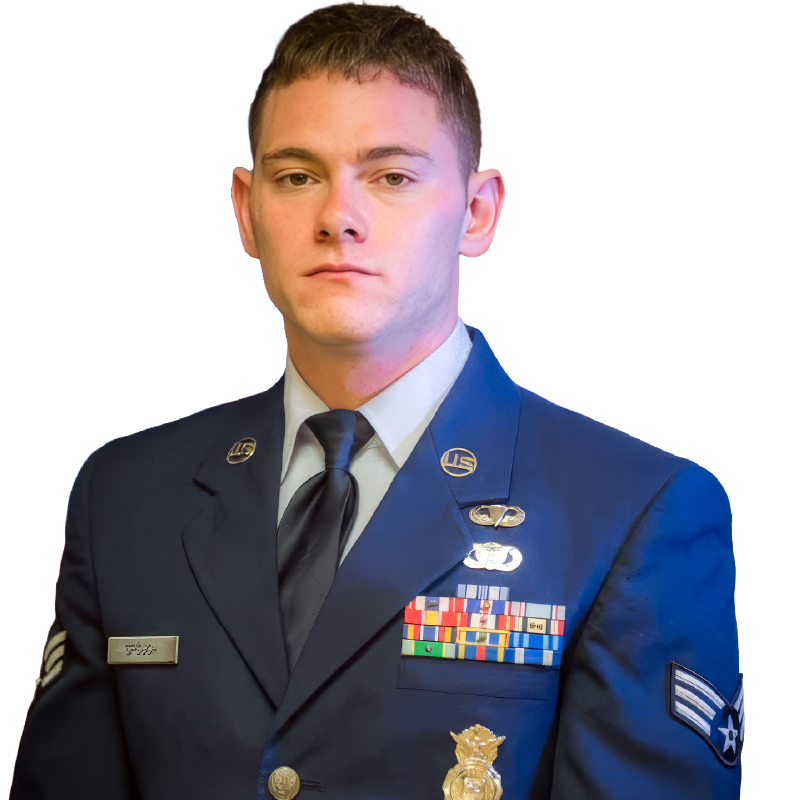
Christian Crouch | United States Air Force
Christian Crouch served in the United States Air Force for eight years on active duty, followed by three years in the inactive reserves. He worked in Security Forces and was assigned to the 822nd Base Defense Group at Moody Air Force Base throughout his active service. His path to the military began in high school, where he participated in Air Force JROTC for all four years, an experience that ultimately inspired him to enlist.
Looking back, Crouch says the military shaped him in lasting ways, instilling a no-quit mindset, strong discipline and a deep sense of structure. It also opened doors to opportunities that pushed him to grow, both personally and professionally. His guiding principles are simple but steady: never give up, lead with love and act with integrity. Along the way, he credits mentors Tyrell Hampton, Nicholas Groomes and Joe Reichel for helping shape his perspective during and after his service.
When it comes to supporting returning veterans, Crouch emphasizes the importance of honesty and seeking help, especially when it comes to mental health. He notes that fear of reprisal can sometimes keep service members silent when they should speak up. At times, the weight of those experiences can feel too heavy to carry alone, and he believes it is important for veterans to know they don’t have to. There are people and resources in place to help, and reaching out can make all the difference.
He also believes more can be done to support homeless and struggling veterans. Many, he says, are often misunderstood because of what they have experienced and may simply need someone willing to listen without judgment. He points to the need for stronger communication and better funding for veteran-focused nonprofits, along with the idea that every city should have a fully funded, veteran-specific shelter to ensure access to safe housing and support.
Looking ahead, Crouch says his goal has always been to be the best version of himself each day and to make a positive impact on others along the way. His personal motto, “Help others to create a better future,” reflects that mindset. He also shares a broader perspective on the country, expressing a desire to see less involvement in overseas conflicts and more focus on challenges at home. In his view, greater balance and accountability could make a meaningful difference for both service members and civilians.
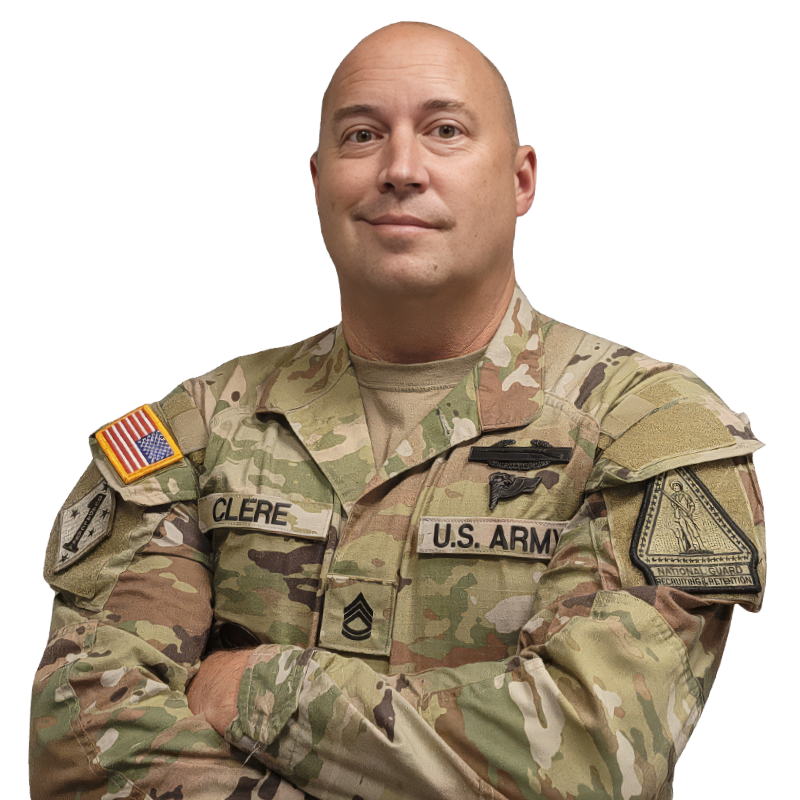
Kris Clere | Former Army National Guard 2001–Present
Kris Clere has served in the Florida Army National Guard since Aug. 10, 2001, with 24 years of service. His career includes two deployments, one during the invasion of Iraq from 2003 to 2004 and another for security operations in Kuwait in 2010.
While attending Florida State University, a conversation with his father led him to a National Guard recruiter. Having participated in Navy JROTC at Vanguard High School in Ocala, he had long considered military service. The opportunity to serve his country, while continuing his education, ultimately drove his decision.
Clere says the military shaped him through a wide range of experiences, helping him become more resilient and better able to handle stress. He served 15 years in the infantry, worked as an Army instructor and now serves as a senior recruiter. “I’ve learned that you only have to take life seriously in very small doses. The rest should be easy and effortless,” he says.
When it comes to returning veterans, Clere believes in doing the work and earning opportunities rather than expecting handouts. He says the transition to civilian life still requires patience. After his first deployment, he took an entry-level position with the U.S. Forest Service and worked his way up, adding wildland firefighting and law enforcement assignments.
Clere believes one of the biggest challenges for homeless and struggling veterans is lack of connection between those who need help and organizations offering it. Outreach, he says, could help bridge that gap. “It’s not an easy problem, but bringing people together to share ideas and take action is a good place to start,” he says.
Guided by the principle of “be worthy,” Clere strives to live up to the expectations he sets for himself. He credits his father, Mark Clere, along with military leaders, for shaping his approach to leadership, family and service.
Currently, Clere serves as senior recruiter and station commander for Marion and Citrus counties. He is also the defensive coordinator and assistant coach for Belleview High School girls flag football, strengthening his passion for mentoring young people. He founded the Be Worthy Organization and serves on the board of Sportsmen for Warriors.
He believes one of the most important changes needed in the country is better communication and access to accurate information. “It’s important that people are given clear, honest explanations so they can form educated opinions,” he says.
For the next generation considering military service, Clere’s advice is simple: take the leap. “I would say yes to my recruiter a thousand times over,” he says. “It’s helped shape who I am and introduced me to people who would drop everything to help when it matters most.”