
Inside The Ora Clubhouse, members are rebuilding confidence, connection, and a sense of purpose, one day at a time.
What’s happening at The Ora Clubhouse today is part of something much larger, something that began quietly and almost accidentally decades ago.
In the late 1940s, a small group of psychiatric patients in New York started meeting informally in what they called a “club room.” After leaving the hospital, they kept meeting—this time on the steps of the New York Public Library. They weren’t just passing time. They were building connection, accountability, and a sense of belonging they hadn’t found anywhere else. They called themselves WANA—We Are Not Alone.
That idea, simple but deeply human, became the foundation for what is now known as the Clubhouse model. The first official space, Fountain House, opened in 1948 and introduced something quietly radical: people were no longer treated as patients, but as members. There were no time limits. No labels to define them. Just a place where people could show up, contribute, and begin to rebuild a sense of purpose.
Over time, that model spread, rooted in the belief that recovery doesn’t come from isolation or diagnosis, but from connection, shared work, and being needed.That same philosophy is what shapes The Ora Clubhouse here in Ocala today.
There are so many different levels to mental health, and yet we tend to talk about it as if it’s one thing. What I came to understand, after spending time at the Clubhouse, is how much of that understanding is shaped by what we think we know, and how often that picture is incomplete.
The stigma surrounding mental illness can feel deeply unfair to the kind, thoughtful people who are quietly working through something. For some, it’s trauma from childhood. For others, it’s anxiety, depression, or the lasting effects of experiences they never fully had the space to process. Sometimes, it’s simply feeling stuck, unable to move forward, even when you want to.
And if I’m being honest, it hit a little closer to home than I expected.
What stood out to me inside the Clubhouse wasn’t a sense of limitation—it was a sense of possibility.
Because at its core, what the members are building there isn’t complicated. It’s real.
A sense of community.
A sense of purpose.
A place to belong.
There’s structure and opportunities to work, to contribute, to learn something new. There’s an emphasis on healthy living, on movement, on showing up not just physically, but mentally.
Part of that is built into the day. Members go on group walks, getting outside, getting fresh air, just stepping away for a bit. It’s simple, but you can tell it matters.
And a lot of it happens through the work itself. Some members are outside doing yard work, learning how to use equipment, getting comfortable with things they could take into a job one day, landscaping, maintenance, things like that.
There are also smaller, more personal moments mixed in. For example, one member, Clarence “CJ” Davis, has a smoothie named after him. Members come up with their own combinations, and when something sticks, it becomes part of the routine. And maybe most importantly, there’s space for people to reconnect with something inside themselves, something they enjoy, something they’re proud of. That kind of environment has the power to shift everything.
Sometimes, it only takes one small change—a new routine, a reason to get out of bed, a place where they know your name—to become the thing that helps someone move past the weight of their own mind.
But what we often see, especially in media and conversation, tells a much narrower story. Mental illness is frequently portrayed in extremes: as crisis, as instability, as something distant and unfamiliar.
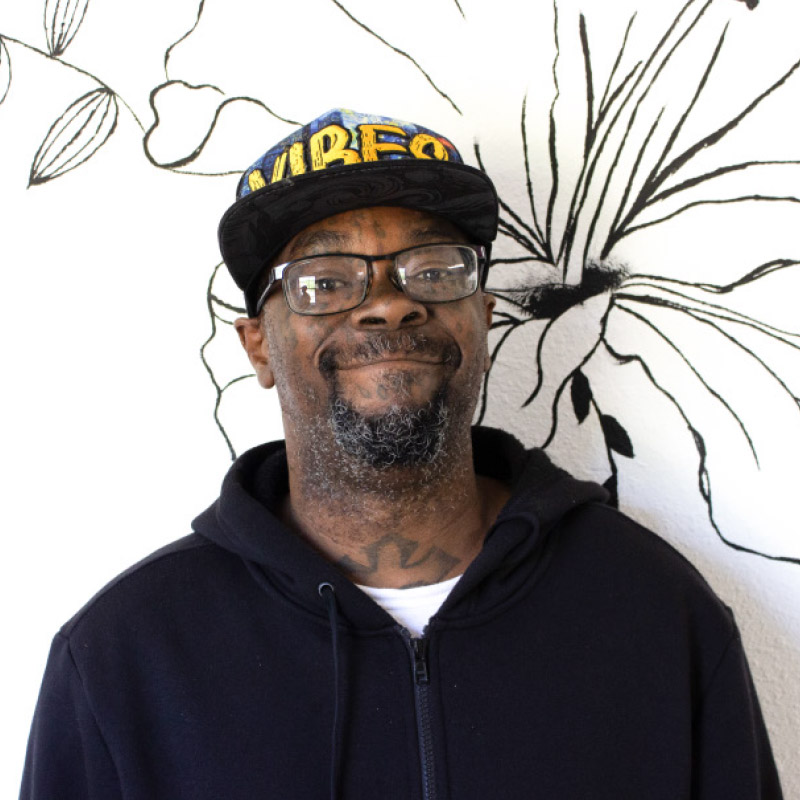
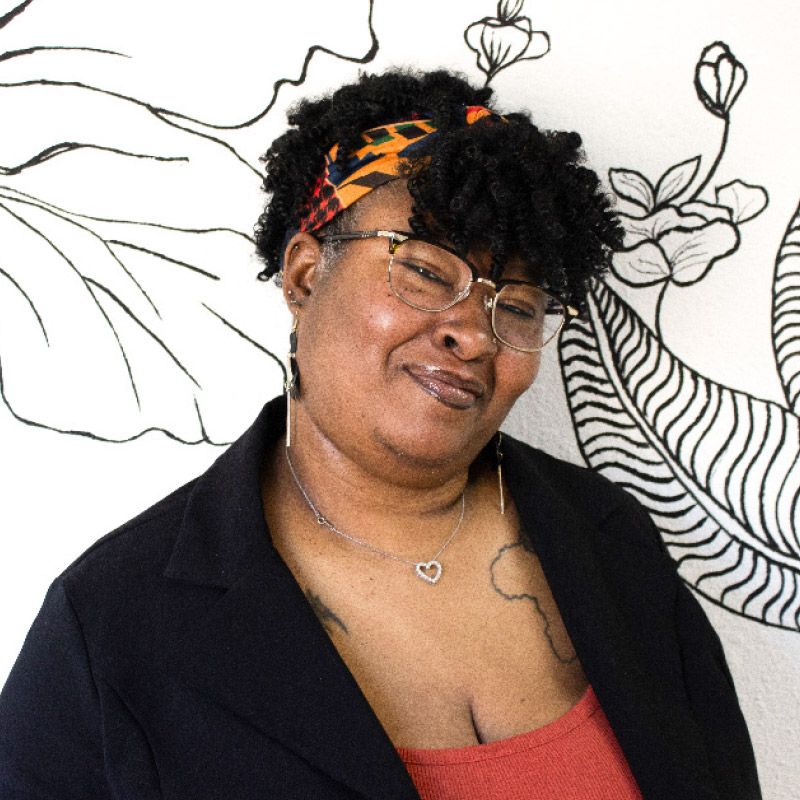
That’s not what I saw. What I saw were people. People like Stacie Bruschi, who is writing for the Clubhouse newsletter and discovering a passion for journalism. She told me she wants to write a book someday. “If I don’t try, how will I know?” she said.
She shared a lesson she once learned, that success often comes from learning all the ways something doesn’t work before it finally does.
And that idea, that you’re allowed to try, to learn, to keep going, is something that lives quietly inside this space.
Mental health isn’t what we’ve been conditioned to think it is. Sometimes it’s visible. Sometimes it isn’t. Sometimes it’s loud. Often, it’s quiet. And more often than not, it’s something we all brush up against in different ways throughout our lives.
Which is exactly why places like The Ora Clubhouse matter. Because no one should feel invisible.
Noticing someone, their presence, their effort, even something as simple as their smile, matters more than we realize. A small moment of kindness, a word of encouragement, a simple acknowledgment … those things stay with people.
I saw it even in the smallest ways. CJ was giving a tour for the first time, a little nervous, finding his footing as he went, when another member, Dennis Johnson, stepped in and helped him along. The two of them finished it together. That’s not about mental illness. It’s just being human.
And maybe that’s the point.
We’re not as different as we sometimes think.
And every one of us, at some point, could use a little support.
Vanessa Mathew, who is currently serving as the executive director of The Ora Clubhouse, describes the model.
“It’s a place where people come to feel good,” Vanessa said. “A place to meet like-minded people, and a place to just be.”
Each day is structured, but not rigid. Members share in the work that keeps the Clubhouse running. Preparing meals, maintaining the space, learning skills that translate into real-world jobs. It’s not about training for one specific role, but about building confidence across many areas.
“It’s a place where people come to feel good. A place to meet like-minded people, and a place to just be.”
—Vanessa Mathew
“We teach them a little bit of everything,” she said. “So when they go out into the real world, they’re not scared.”
But beyond the daily rhythm, what Vanessa described goes deeper.
“Mental illness is when the mind’s normal way of thinking, feeling, and coping stops working properly—even if nothing on the outside has changed,” she explained.
It’s a distinction that helps shift perception, from something we assume we can see to something we begin to understand.
And at the heart of it all is something much simpler.
“When you give someone a purpose, it really develops their mind,” she said. “It takes them out of one situation into another.”
That purpose, paired with connection, is what defines the space.
“We are not alone,” she added, referencing the Clubhouse philosophy known as WANA.
Because ultimately, what they are building isn’t just a program. It’s something more than that.
“You’re not just giving people a place,” she said. “You’re giving them a feeling—‘I belong somewhere, I matter here, and I’m becoming someone better.’”
That understanding became even clearer when I met Victoria Fiorillo.
Interestingly, Victoria’s voice had already been part of the conversation before we officially sat down. When I first connected with Vanessa, she mentioned that Victoria, one of their members, had helped thoughtfully answer some of the initial questions.
That alone said something to me.
Not just about Victoria, but about the kind of environment the Clubhouse creates, one where members don’t just participate—they contribute. When I met her in person, it all came into focus.
Victoria is, by every definition, thriving. She recently purchased her first new car. She’s been sober for years. She’s lost more than 70 pounds. But more than any single milestone, what stood out was something less tangible and more important. She’s found a sense of purpose.
And you can feel it when she talks.
There’s a clarity. A confidence. A quiet pride in how far she’s come. Stories like Victoria’s are easy to reduce to outcomes: weight lost, years sober, milestones. But those things didn’t happen in isolation. They happened because she found structure. Support. A place where she was needed. A place where she could show up consistently and begin to rebuild not just her habits, but her sense of self.
Which is exactly what The Ora Clubhouse is designed to do. When I asked Victoria what Ora has meant to her, she didn’t hesitate. “A lot of things,” she said. “This place has done wonders for me.”
Before finding Ora, her life looked very different.
“I was in and out of hospitals … I was doing things I wasn’t supposed to be doing,” she said. “When you’re on drugs, you don’t care about nothing but yourself.”
She paused, then added something simpler, something that stayed with me.
“This place keeps me sane,” she said. “Instead of sitting home and hibernating … I just come here. I love it here.”
Over time, that consistency started to change things.
She learned how to use computers. Helped create the Clubhouse newsletter. Started cooking. Found small, everyday skills that began to rebuild her confidence.
And slowly, piece by piece, she found her way back to herself.
“It brought me back to the person I am,” she said.
Today, the changes are visible, but they’re also deeper than what you can see on the surface.
Victoria has been sober for years. She’s lost more than 70 pounds. She recently got her first new car.
But none of those milestones stand on their own.
They’re the result of something more foundational: having a place to go, people to be around, and a reason to keep showing up.
Because as she put it simply: “Everyone needs a purpose.”

Stories like Victoria’s don’t happen by accident. They’re the result of consistency, structure, and a place that allows people to show up day after day and begin to rebuild. And that’s exactly what makes what The Ora Clubhouse is doing so important, and at the same time, so vulnerable.
But like many organizations doing deeply meaningful work, the Clubhouse is operating with limitations that are hard to ignore. Right now, they’re in a temporary space, renting month-to-month, without the ability to make the kinds of improvements that would truly support their mission. And those limitations aren’t just logistical. They directly affect what members are able to learn and experience each day.
There’s no full kitchen setup, no proper oven, no dishwasher—simple things that most of us take for granted. But here, those aren’t just conveniences. They’re opportunities.
Because part of what the Clubhouse model offers is hands-on, real-life skill building. Cooking. Cleaning. Learning how to prepare meals. Understanding how a kitchen operates, whether for a future job or simply to care for yourself at home.
Without those tools, that learning is limited.
Transportation is another challenge. Without a dedicated van, some members struggle just to get there, cutting off access to the very place designed to support them.
And perhaps most significantly, there’s the uncertainty of space itself.
What The Ora Clubhouse truly needs is something simple, but not easy to secure:
A place to call their own.
A space where they can build, grow, and create an environment that fully supports the people who rely on it, not just for structure, but for connection, purpose, and stability.
Because when you walk through the doors, it becomes clear. This isn’t just a program that can be picked up and moved.
It’s something that needs roots.