
For more than 30 years, University of Florida students have raised millions for pediatric health.
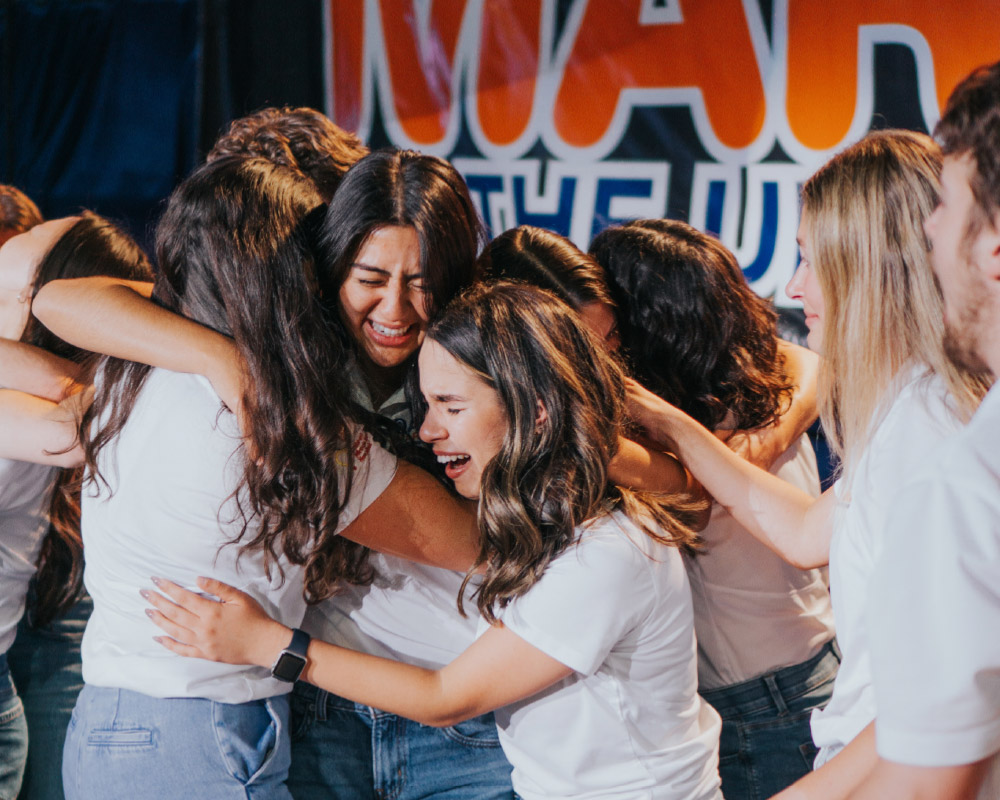
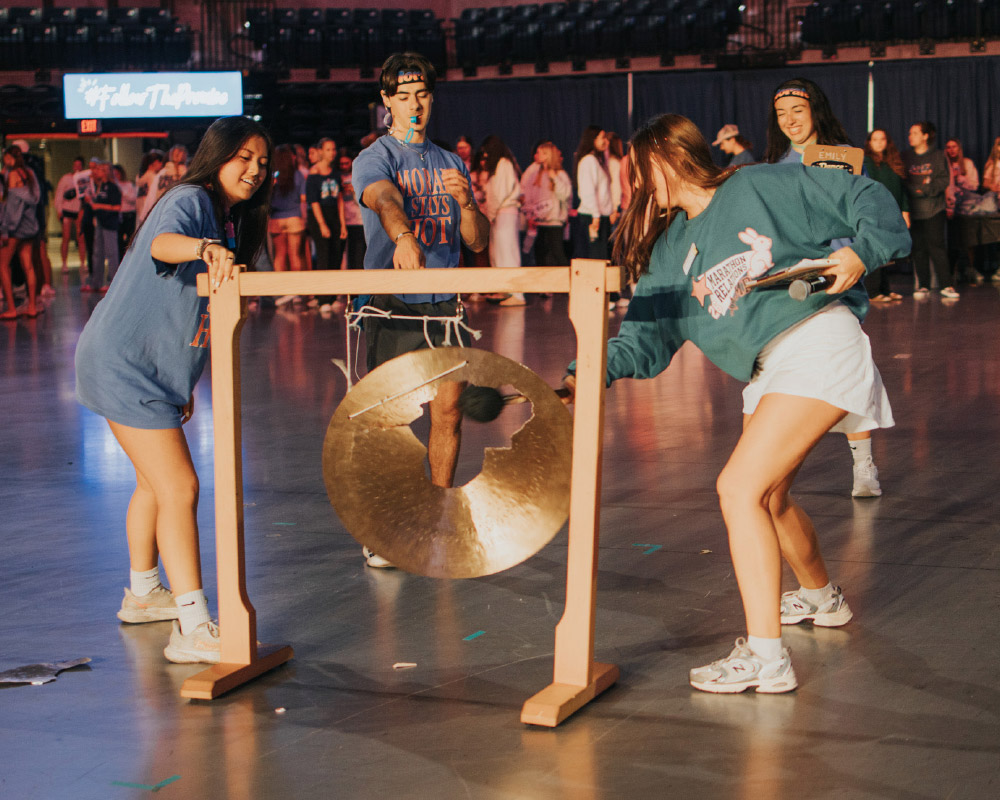
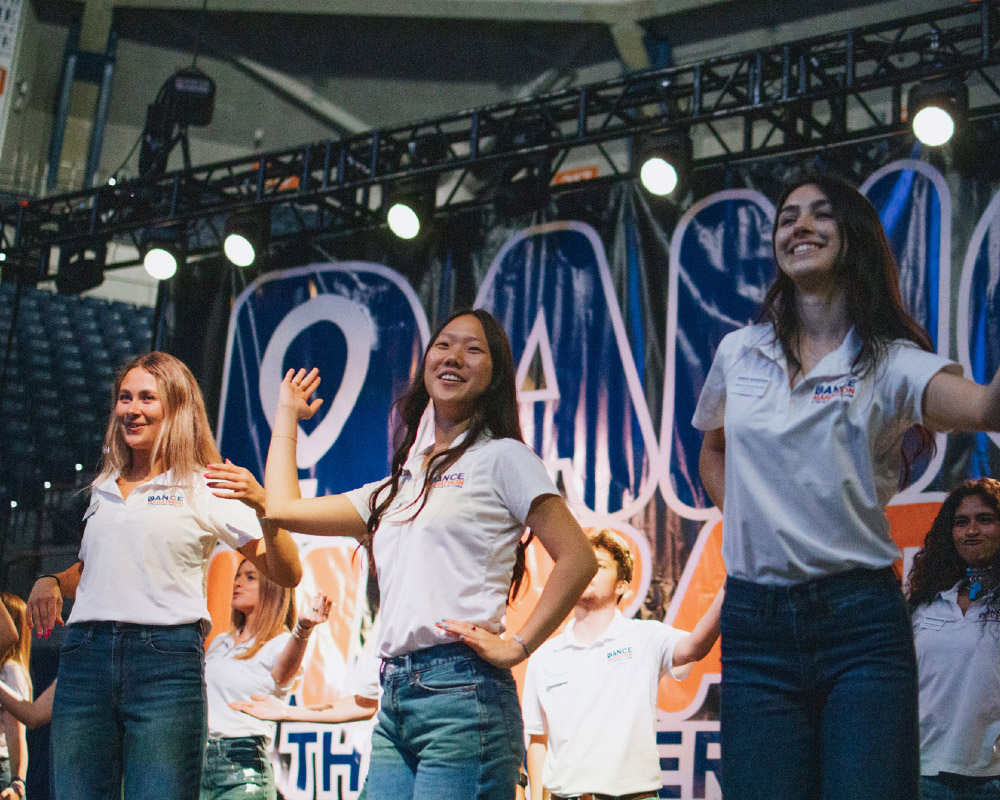
At the end of every spring semester, hundreds of students at the University of Florida gather at the Stephen C. O’Connell Center, aka the O’Dome, for a 26.2-hour “marathon” of dancing, cartwheeling, and motivational speeches, among other upbeat activities. Yet between the bursts of activity that help to keep spirits high in the arena throughout the event, students are completing the real work of the annual marathon: calling friends, relatives, fellow alumni, and area businesses to solicit pledges for one of Florida’s leading pediatric hospitals.
Known as Dance Marathon at UF, the spring event has the energy of a pep rally and the urgency of a telethon, with students trying to raise as much as they can before the final total is revealed. Since it began in 1995, Dance Marathon at UF has raised more than $34 million for UF Health Shands Children’s Hospital, and in 2026 alone, the initiative has raised more than $1.1 million.
Half of the money raised by Dance Marathon supports UF Health Shands Children’s Hospital directly, including patient care programs, equipment, and capital improvements. The other half supports the UF College of Medicine Department of Pediatrics, where funds help to advance pediatric research connected to the hospital.
The initiative provides significant support for the children’s hospital—literally. There’s a central pillar in a recently renovated pediatric unit that, under its paint, bears the signatures of several Dance Marathon student leaders in honor of the funds raised by the group to complete its construction. One of those signatures belongs to Marina Cheema, a pre-pharmacy student at UF who is currently shadowing a pediatric pharmacist in renovated units. Cheema, who is also the marketing manager for Dance Marathon, often walks by the pillar and remembers signing it.
“It was really gratifying for me to see the process that goes on in rounds with the care team, and since we helped fund those units, it’s kind of full circle,” says Cheema.
A Campus Tradition
This year’s Dance Marathon spring event included nearly 1,500 registered participants, with about 700 students participating in person. The O’Dome event is the organization’s most visible effort, but the work stretches across the academic year as student leaders recruit participants, build partnerships, and communicate with donors in preparation for the capstone event.
Behind the scenes is a fully student-run operation with many moving parts. Students work across marketing, operations, membership, and finance roles to handle responsibilities that resemble those of a professional nonprofit or events team. By the time the O’Dome fills in the spring, dozens of students have already spent months preparing for that one long weekend.
“Dance Marathon at UF is the largest student-run philanthropic organization on campus, we fundraise for one of the best children’s hospitals in the country,” Cheema says. “People come from all over the world for care at Shands. Getting involved with Dance Marathon means supporting kids who never stop fighting, and that’s something really beautiful to me and to our campus.”
The collegiate Dance Marathon movement began at Indiana University in 1991 as a student-led effort to support Children’s Miracle Network, a nonprofit that raises money and awareness for 170 children’s hospitals across the United States and Canada. The organization works through local hospitals, community donors, and corporate partners, and the funds raised in each community directly support that community’s specific member hospital. The donations help hospitals meet a range of needs, from pediatric equipment and patient-care programs to family support, research, and other services that improve outcomes for children.
UF Health Shands Children’s Hospital has been the Children’s Miracle Network affiliate hospital for Central Florida, North Florida, and Southern Georgia since the 1980s. That connection made UF a natural choice to launch one of the earliest Dance Marathon campus chapters soon after the founding chapter.
“Choosing to support Dance Marathon at UF means choosing to support local,” says Shae Helmer, a business student at UF who serves as head of Dance Marathon’s public relations. “It means protecting children who are within a few hours of you and supporting them.”
The regional connection also extends to the Dance Marathon participants, as many of the initiative’s student leaders come from communities across Florida. Some are pursuing health care careers, while others are drawn to service, leadership, fundraising, communications, or nonprofit work.
“If you choose to support a member of Dance Marathon, you’re choosing to support not only a local philanthropy, but also a local student working to make it happen,” says Helmer, who is on UF’s equestrian team and divides her time between Gainesville and the team’s barn in Ocala.
Discovering a Heart for Service
Serving as Dance Marathon leaders has also shaped how Cheema and Helmer are thinking about their futures. Cheema came to UF planning to pursue pre-med, but her resolve wavered during her freshman year. She then joined Dance Marathon through a friend who was already involved and quickly connected with the mission to support pediatric health care. “I was hooked,” Cheema says. “It’s a really big learning opportunity for leadership and just personal growth for students.”
Cheema now plans to become a pediatric clinical pharmacist. Dance Marathon, she says, helped her find the link between her chemistry major, children’s medicine, and the daily work of a pediatric care team. “Dance Marathon is really my why for all of that,” she says. “Without it, where would I be? Maybe I would be doing research, or maybe I would be a chemical engineer, but Dance Marathon led me to pediatric clinical pharmacy.”
Helmer, by contrast, is a business administration major with an emphasis in sports management. She joined Dance Marathon last year as a fundraising captain, and then moved into a leadership role. The experience has pushed her to consider nonprofit communications as a possible career path. “This position has really helped me discover a heart for service,” Helmer says.
Sarah Forron is the UF assistant director for student and young alumni engagement, and she serves as the campus advisor for Dance Marathon. She says she has watched exactly this kind of student growth happen year after year in Dance Marathon.
“Serving as the advisor for Dance Marathon at UF has been one of the greatest privileges of my career,” Forron says. “Since 2017, I’ve had the opportunity to watch our students grow into remarkable leaders while developing a lifelong passion for service. Because of Dance Marathon, Miracle Families have celebrated milestones they never thought possible—birthdays, graduations, and remissions. This community of driven, compassionate students is truly changing the world for the better, and I am grateful to play a small part in their incredible impact.”
Broadening the Circle
Dance Marathon at UF has long drawn strong participation from fraternities and sororities. This year’s student leaders are working to expand participation across UF’s larger student organization landscape. UF has more than 1,000 student organizations, including club sports, business fraternities, pre-health groups, and service organizations. Dance Marathon’s membership team is reaching out across that network to build partnerships and bring in students new to the program.
The effort reflects a broader shift within the organization. Dance Marathon leaders say they want students to view the program as a year-round service opportunity, rather than simply a single event at the end of the academic year. That means reaching organizations that may never have considered participating before, from club sports to academic organizations and professional societies.
At recruiting tables, Cheema says, students sometimes stop short because they assume Dance Marathon requires actual dancing. “They walk by our table, they’re like, ‘Oh, I don’t dance,’” says Cheema. “I say, ‘I don’t either.’”
Instead of calling participants “dancers,” the team prefers to call students who get involved “miracle makers.” Cheema says many campus organizations already have service built into their missions, making them natural partners for Dance Marathon. Student groups may also find volunteer opportunities, leadership experience and resume-building opportunities through the program.
That broader outreach also gives students more ways to participate. Some may join through established campus organizations, while others may come in individually and find a place through Dance Marathon’s own teams. The aim is to make the program accessible to students who want to serve, even if they do not already belong to one of the groups traditionally associated with the event.
During the O’Dome event, students learn to make donation asks in ways that feel personal and authentic. Some rely on family networks, while others are more comfortable contacting hometown businesses, alumni, or companies with a connection to children’s hospitals. The goal, in all cases, is to learn how to foster a connection between the cause and the call recipient as fast as possible. Helmer, for example, pledged to perform a cartwheel for every dollar donated, a lighthearted challenge that successfully netted more than $300.
This year, the Dance Marathon team has launched a summer recruitment campaign called “Carry the Dream.” The idea is to keep students, alumni, donors and supporters connected to the children and families at Shands even when college students are away from Gainesville.
“We want them to carry the dreams of children [who are receiving treatment at UF Health Shands Children’s Hospital] with them throughout the summer,” Helmer says. “We want them to remember that even though they may be traveling or back home or wherever they may be, no matter how far they are from UF Health Shands Children’s Hospital, they still carry the dreams of our kids. Whether that dream is ‘I want to get up and be able to play soccer again,’ or ‘I just want to spend a day out of this hospital,’ we want to make sure that they’re keeping that in mind.”
How to Help
For residents and businesses across central Florida, there are several ways to support Dance Marathon at UF. Businesses can become event sponsors or provide in-kind donations. Individuals can also donate to specific Dance Marathon participants or take part in general fundraising drives.
Additionally, the Dance Marathon leadership team hosts a letter-writing campaign every winter, when students send letters with donation information and QR codes to potential supporters. Community members, alumni or businesses willing to receive those letters can be added to the organization’s outreach lists. Happy Hour for Hope, a ticketed cocktail event held at UF at the end of the academic year, is another opportunity for community members to get involved.
“Dance Marathon exists so that no kid ever has to fight alone,” Helmer says. “It’s something that makes me work even harder every single day to make sure that our cause is spread as far and wide as it can be. When you choose to support Dance Marathon at the University of Florida, you choose to support local children at our closest Children’s Miracle Network hospital.”