
Second Harvest expands access to food assistance to Marion County.
There are so many things we never see at face value. When something is done well, we see the finished result, but not always the many moving parts, brainstorming sessions, research, preparation and hard work that made it possible.
The more organizations I have the opportunity to learn about, the more I notice that common thread. When people truly believe in what they are doing, they gladly put in the work, often without expecting recognition. But it is worth taking a moment to notice the effort behind what can appear, from the outside, to happen effortlessly.
That is certainly the case at Second Harvest Food Bank of Central Florida – Marion Branch.
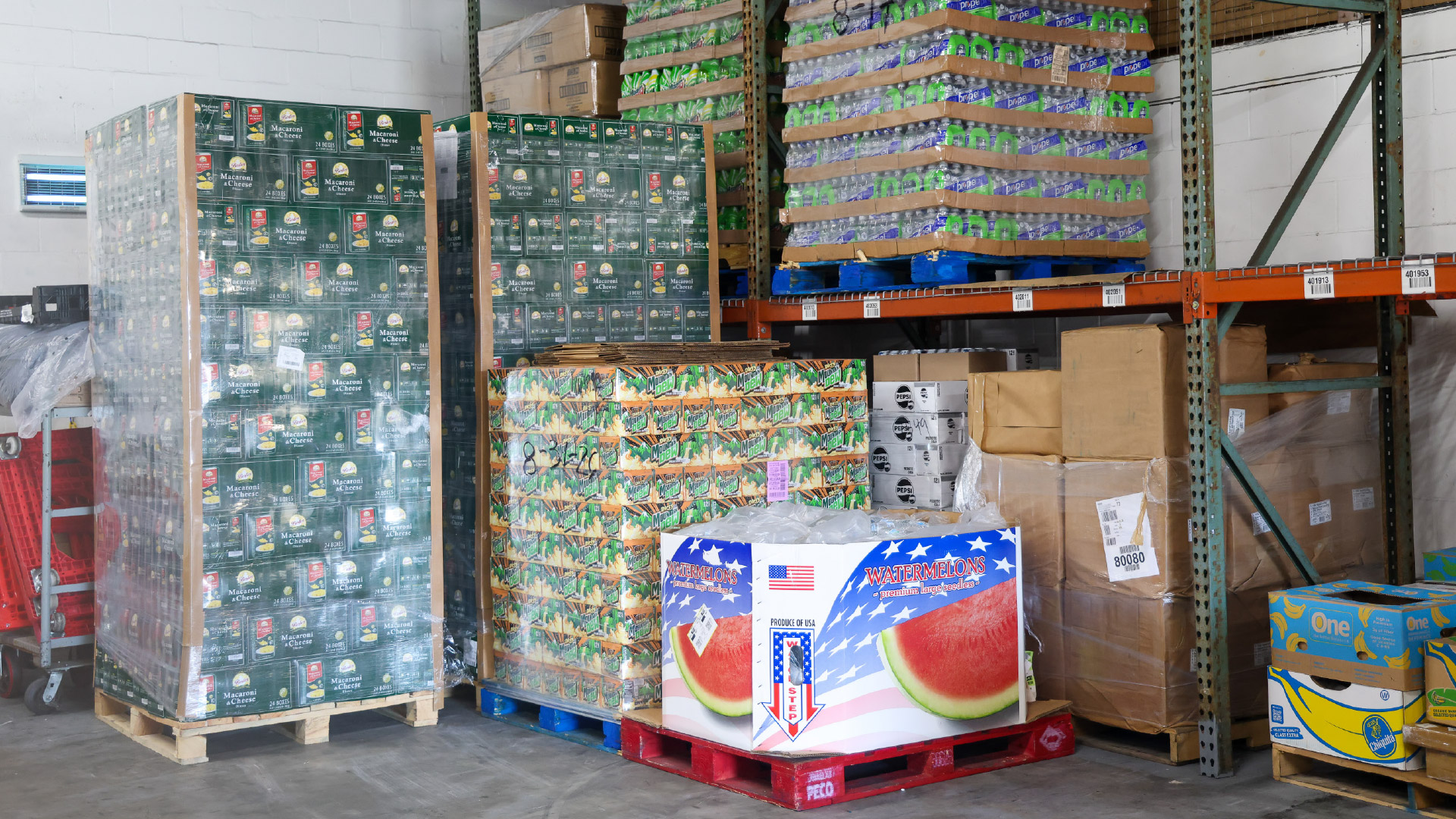
At first glance, the concept of a food bank seems fairly simple: food comes in and food goes back out into the community. But behind that exchange is a network of donors, partner agencies, staff, volunteers, transportation, refrigeration, food safety and logistics working together to make sure food reaches the people who need it.
Second Harvest Food Bank of Central Florida serves seven counties and works with more than 800 nonprofit partners across the region. Here in Marion County, its local branch supports approximately 50 partner agencies that distribute food through pantries, shelters and other community programs.
And the amount of food moving through that system is substantial. Last year alone, approximately 8 million pounds of groceries were distributed in Marion County. Across Second Harvest’s seven-county service area, the organization distributes enough food for 83 million meals each year.
“It sounds like a lot of food, and it is a lot of food, but unfortunately, it’s not quite enough,” Higgerson said.
Those numbers are significant, yet the need is even greater. More than half a million people across Central Florida seek food assistance, including an estimated 60,000 in Marion County. According to Second Harvest, roughly one in seven people in the region struggles to afford enough food for themselves and their families.
And even 83 million meals are not enough to completely close that gap.
The Marion Branch is working to increase distribution from roughly 8 million pounds annually to 11 million pounds over the next 18 months, with support from Marion County, United Way and additional community partners. But one of the biggest obstacles is remarkably practical: space.
The need for additional space goes beyond simply storing more food. The Marion Branch’s current facility also limits some of the work that can take place there. Across Second Harvest’s seven-county service area, volunteers contribute more than 140,000 hours each year, helping with tasks that include sorting food. In Marion County, however, the branch currently does not have the physical capacity to accommodate additional volunteer groups at its facility.
In the meantime, community partnerships are helping the Marion Branch expand its capacity. Central Florida Health Care has provided additional storage space, while Marion County and United Way are among those supporting the effort to increase the amount of food available locally. Ultimately, however, a larger facility would give the Marion Branch more room to store and distribute food while also creating space for the volunteer involvement that currently cannot be accommodated.
But increasing capacity is not simply about moving more food. It also creates opportunities to expand the ways Second Harvest reaches people throughout the community.
“It sounds like a lot of food, and it is a lot of food, but unfortunately, it’s not quite enough.”
–Greg Higgerson, CFRE
One area the organization hopes to grow in Marion County is its School Markets program. Second Harvest currently serves two elementary schools locally, compared with 90 schools throughout its seven-county service area. Because the Marion Branch has only been operating for about three years, Greg Higgerson, chief development officer for Second Harvest Food Bank of Central Florida, said expanding the program here is a priority.
The markets essentially operate as small food pantries inside participating schools. Students can pick up food to take home to their families or have access to snacks during the school day.
“It’s an important way to reach kids that may not be getting a lot of food at home,” Higgerson said.
The need for food assistance can also arise unexpectedly.
Higgerson recalled recently meeting a family that had relocated to Central Florida from Michigan after their youngest of four children developed a rare condition that caused a severe reaction to cold temperatures. The mother, an employee of Ford Motor Company who was already working remotely, received permission to continue her job from Florida.
The family invested much of its savings in the move.
Then, just a few months later, she was laid off.
With four children and an unexpected loss of income, the family was suddenly struggling to afford enough food. Second Harvest’s network of partner organizations helped them through that period until both parents were working again.
“Life comes at you, as they say. And sometimes you don’t plan, even though you do your best,” Higgerson said.
It is perhaps one of the simplest explanations for why a network like Second Harvest exists. Food insecurity does not always begin with a long series of circumstances. Sometimes life changes quickly, and a family that was managing yesterday needs help today.
For those who want to help, that support can take several forms. While the Marion Branch does not currently have enough space to accommodate additional volunteer groups at its facility, Second Harvest’s approximately 50 partner agencies throughout Marion County rely on volunteers to help serve their communities.
Financial contributions and simply helping others understand the extent of food insecurity in Central Florida also make a difference.
“If we’re removed from it, we don’t think about it,” Higgerson said. “It’s a huge problem sort of right under the surface of Central Florida life.”
And sometimes seeing what exists beneath the surface is the first step toward helping.